


Views: 0 Author: Site Editor Publish Time: 2026-10-21 Origin: Site


Every pressurised pipeline carries air. Where that air is allowed to collect, it quietly costs flow, pressure and equipment life. This guide explains the three air valve designs in the ERA range — K, A and C type — and how to match each one to the duty it actually performs.
Air enters a pipeline in three different ways, and each one produces a different failure mode:
1. Bulk air during filling and draining. When a main is filled, the air ahead of the water column has to go somewhere. If it cannot escape, it compresses into pockets that restrict the fill rate and release as a surge when the pocket finally collapses. Pumps end up running against trapped air instead of water, and valves take the shock.
2. Entrained micro-bubbles under pressure. Water releases dissolved gas as temperature and pressure change, and that gas gathers at the highest points of the line. The pockets reduce the effective bore, disturb flow measurement, and feed cavitation at pumps and control valves.
3. Vacuum on shutdown. When a pump stops or a line is drained, the falling water column creates negative pressure behind it. Without an inlet that opens under vacuum, that negative pressure can collapse thin-wall pipe, draw groundwater and soil into joints, and pull contamination back through the network.
These are three separate duties: bulk air intake and exhaust, continuous micro-bubble venting at pressure, and vacuum protection. No single internal design handles all three equally well — which is exactly why the ERA air valve range is built around three families rather than one universal body.
Type | Core function | Bulk air exhaust / intake | Micro-bubble discharge under pressure | Typical scenarios |
K type (kinetic) | Rapid air inlet and outlet | Strong | Not available | High points of long pipelines; air release during pipe filling and vacuum prevention |
A type (kinetic micro) | Micro air release | Not available | Continuous micro-bubble venting | High points where gas continuously precipitates during pipeline operation |
C type (combined composite) | Both duties in one body | Strong | Continuous micro-bubble venting | Filters, water supply mains, pump houses — the most versatile all-round model |
With a refined aerodynamic design, ERA air valves manage air intake and exhaust during pipeline filling and draining, and balance inflow and venting so that the seat holds tight at low pressure. The result is a line that fills faster, meters more accurately, and stays free of the pressure spikes that shorten the life of pipe and fittings.
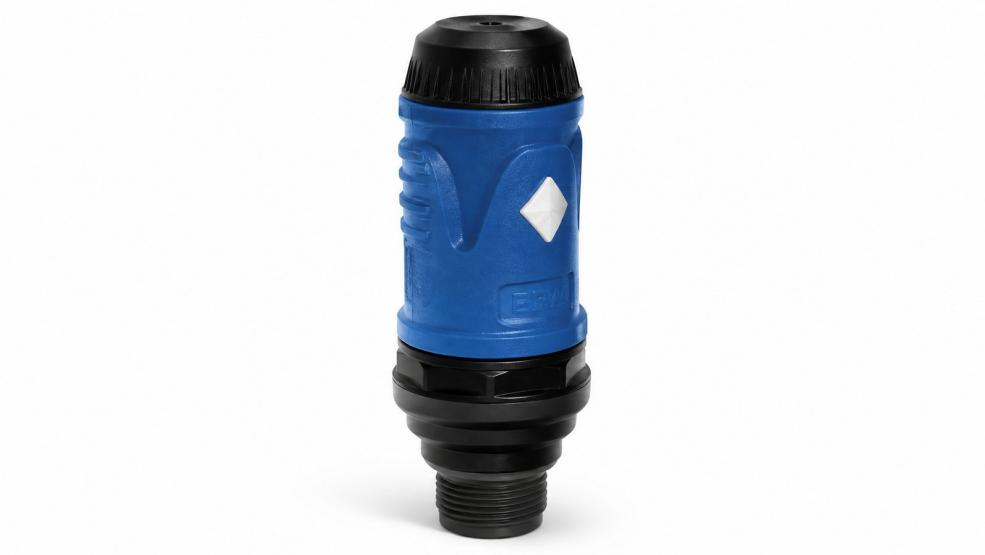
K type kinetic air valves are built for the moments when air volume is the problem, not air pressure. During filling, they discharge air at high velocity; during operation, they continue to remove air at high velocity. A refined aerodynamic geometry and a kinetic orifice structure let the valve handle bulk air release under low-pressure conditions without the seat chatter that plagues simpler designs.
Where they belong: high points of long pipelines, air release during pipe filling, and vacuum prevention on lines that are regularly emptied.
Range: models KA10, KA11, KA12, KA30, K10 and K20 · 3/4" to 2" · BSPT/APT · orifice 288–908 mm² · working pressure 0.2–16 bar.
Construction: insect screen, air intake and exhaust holes, dynamic seal and float ball. The screen matters more than it looks — it keeps insects and debris out of the orifice chamber on exposed irrigation lines.
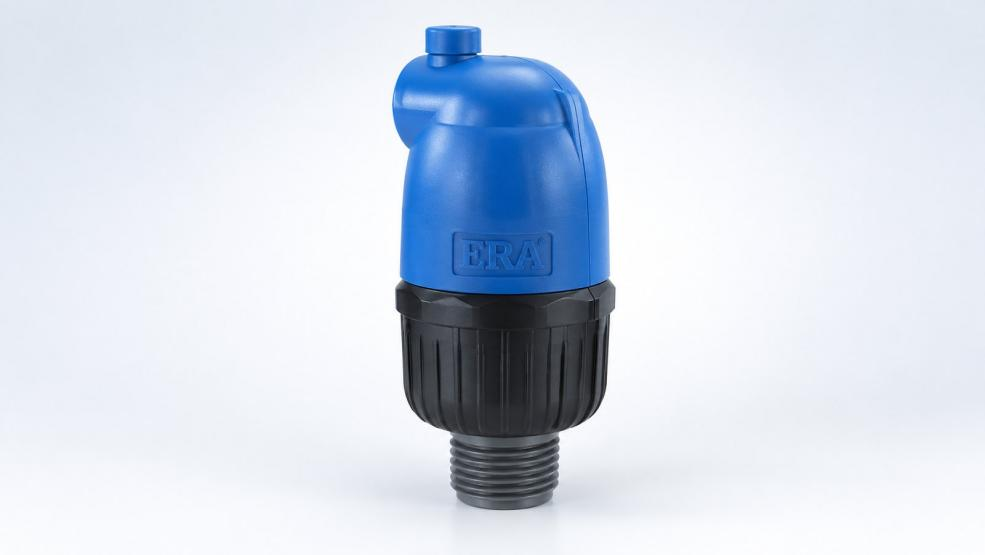
The A type kinetic valve opens the inlet quickly when negative vacuum pressure develops inside the system or pipeline. A large volume of air enters and destroys the vacuum that has formed, and the inlet then seals again under water pressure. In filtration systems this eliminates vacuum formation and improves draining efficiency — the filter body empties properly instead of glugging against a trapped air cushion.
Where it belongs: high points where gas continuously precipitates during operation, filter and water supply manifolds, and pump houses where draining efficiency affects backwash quality.
Range: model A20 · 2" · BSPT/APT · orifice 858 mm² · working pressure 0.2–16 bar · compact body at roughly 131 × 72 × 80 mm and 185 g, which makes it easy to fit on skids and tight manifolds.
Construction: insect screen, dynamic sealing, float and stopper disc.
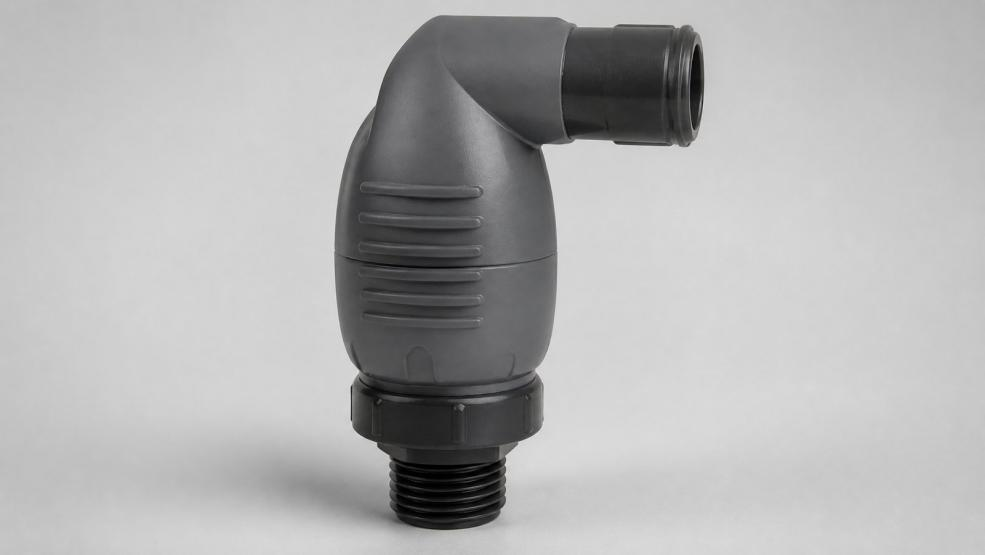
C type kinetic valves are engineered for diverse irrigation systems and operating conditions. When the system fills with water, the valve discharges large volumes of air from the pipeline. When the system is under pressure, it effectively vents small volumes of trapped air. An advanced aerodynamic design gives protection against air accumulation and vacuum formation, with sealing performance maintained under low pressure.
That combination is why the C type is the most versatile all-round model in the range: it covers the fill-and-drain duty of a K type and the continuous venting duty of an A type in a single fitting.
Where they belong: filters, water supply mains and pump houses — anywhere a line is filled, drained and operated at pressure on a regular cycle.
Range: models C10, C11, C20, C21 and C50 · 3/4" to 2" · BSPT/APT · orifice 374–1200 mm² · working pressure 0.2–16 bar.
Construction: insect screen, kinetic orifice, dynamic seal, automatic orifice, kinetic plug, seat and float — the two orifices are what allow one valve to serve both duties.
Duty on your system | Type to specify | Typical location |
Filling a long main; releasing bulk air at high velocity | K type | High points along rising mains, at the end of long laterals |
Preventing vacuum while a line drains or a pump stops | K type | Downstream of pumps, at siphons and low points that empty |
Continuous venting of gas precipitating under pressure | A type | High points on operating mains, filter and manifold heads |
Filter stations, pump houses, mains that fill and run under pressure | C type | Filter outlets, pump discharge headers, distribution mains |
On a typical irrigation scheme, the practical combination is a K type where the line is filled and emptied, an A type at the high points that stay under pressure all season, and a C type wherever both duties land on the same node.
Series | Models | Connection sizes | Threads | Orifice (mm²) | Working pressure |
K type | KA10, KA11, KA12, KA30, K10, K20 | 3/4", 1", 2" | BSPT/APT | 288–908 | 0.2–16 bar |
A type | A20 | 2" | BSPT/APT | 858 | 0.2–16 bar |
C type | C10, C11, C20, C21, C50 | 3/4", 1-1/2", 2" | BSPT/APT | 374–1200 | 0.2–16 bar |
Model-by-model dimensions and weights are listed in the ERA air valve catalogue and on each product page, alongside the thread options available for your market.
1. What is the pipe size and thread standard? The range is offered in BSPT/APT from 3/4" to 2"; confirm with sales before designing around NPT.
2. Which air duty dominates? Bulk air, continuous micro-venting, or both. This single answer decides K, A or C.
3. What is the real pressure envelope? All models are rated 0.2–16 bar. Check both the minimum pressure at the valve (the seat must hold) and the surge pressure during pump stop.
4. What is the water quality? Irrigation water with high sediment or algae load puts more demand on the insect screen and orifice chamber — plan inspection intervals accordingly.
5. How will it be serviced? A valve nobody can reach is a valve nobody maintains.
• Mount vertically at the high point of the section, with the outlet clear of standing water and spray.
• Fit an isolation valve below the air valve so the unit can be serviced without draining the main.
• Flush the line before commissioning. Debris pushed into the orifice chamber during first fill is the most common cause of a valve that will not seal.
• Keep the insect screen clean. On exposed agricultural lines this is the main wear item.
• Inspect the dynamic seal and float at the start of each irrigation season, and replace worn seals rather than running a valve that weeps at low pressure.
What is the difference between a kinetic and an automatic air valve?
A kinetic valve uses a float and a large orifice to move air at high velocity during filling and draining — high volume, short duration. An automatic (micro) valve vents small quantities of air continuously while the line is under pressure. The ERA C type combines both functions in one body.
Can one valve handle both filling and continuous venting?
Yes — that is what the C type is for. Where the two duties occur at different points on the system, separate K and A type valves usually give a cleaner, more serviceable layout.
What sizes and pressure range are available?
3/4" to 2" depending on series, BSPT/APT threads, all models rated 0.2–16 bar.
Do I need an air valve at every high point?
Not every one, but every point where air can accumulate and cannot travel to another valve: sharp high points on rising mains, the crest of a long lateral, downstream of a pump, and the top of a filter vessel.
The range is built around a single idea: match the valve to the air duty instead of oversizing one design to cover everything. Three families, common BSPT/APT threads, a consistent 0.2–16 bar rating, and sizes from 3/4" to 2" mean the selection is made on system behaviour rather than on what happens to be in stock.
If you are specifying air valves for an irrigation or water supply project, send us the line layout, pipe sizes and operating pressure — our team will confirm the type and model for each high point.