


Views: 0 Author: Site Editor Publish Time: 2026-10-20 Origin: Site


ERA brought its pipeline system solutions for agriculture, forestry, livestock and fishery to the 12th Guangzhou International Fisheries Expo, held from 10 to 12 September 2026 at the China Import and Export Fair Complex in Guangzhou. Of everything on the stand, one product line drew the crowd: the HDPE deep water aquaculture cage system, shown both as full-size components and as a scale model of a complete cage array.
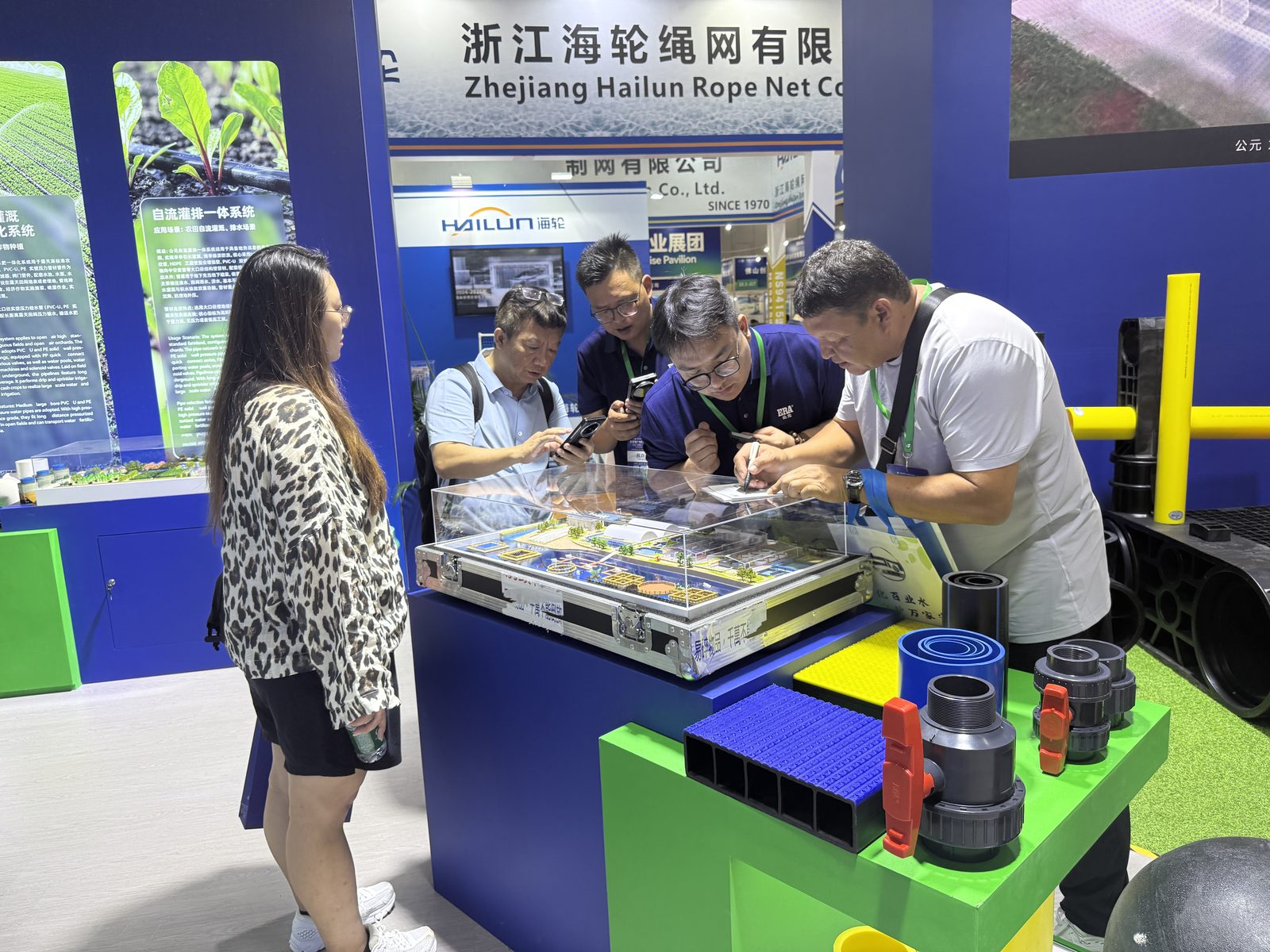
ERA technical staff working through a cage array layout with visitors at the 12th Guangzhou International Fisheries Expo.
Traditional pond farming runs into much the same set of constraints almost everywhere: stocking density stays low, water quality is difficult to control, day-to-day operations lean heavily on manual labour, and effluent is hard to manage. Nearshore cage farming built on floating-ball rafts faces a different set of problems — weak resistance to storms and swell, a measurable contribution to marine pollution, and inconsistent product quality that buyers notice at the point of sale.
ERA's answer to both is a cage system engineered for open coastal water.
The system is designed for open sea sites where water depth exceeds 15 metres. It is built from water-supply-grade HDPE resin — a material selected for toughness, strength and resistance to high-salinity seawater corrosion, with a formulation that limits colour fade and property loss under sustained sunlight.
ERA rates the structure for a wind resistance of Level 12 and wave resistance up to 5 metres. Because the cage is assembled as a modular frame — HDPE pipe, brackets, handrail and 90° compartment elbows, with matching fittings and accessories — a farm can extend or reconfigure its array as it grows, and can add monitoring or automated feeding later without rebuilding the cage itself.
The range builds on cage systems ERA has already supplied to marine ranches in Zhejiang and Fujian. The earlier deep water aquaculture net cage programme sets out the system design and material specification that this generation follows.
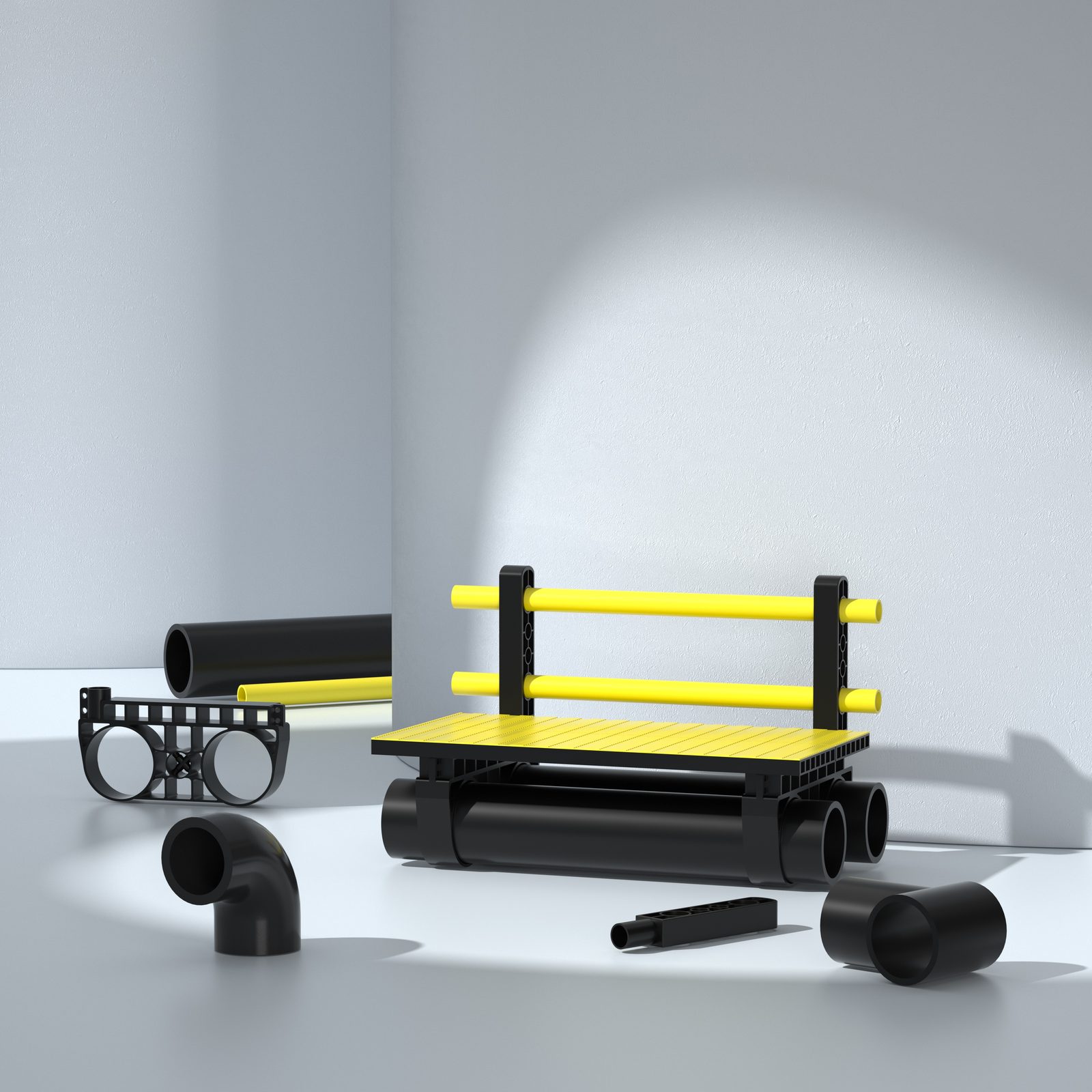
ERA supplies two configurations, and the choice comes down to the site rather than to price.
Configuration | Best suited to | Key advantage | Reference projects |
|---|---|---|---|
Norwegian-style circular cage | Open offshore water | Circular geometry sheds wave and current load efficiently; strong water exchange | Xiapu Marine Ranch; Taizhou Marine Ranch |
Korean-style square cage | Nearshore sites with calmer currents | Higher space utilisation; easier zoned farming and harvesting; flexible contiguous layout | Lingdingyang fishery and tourism project; Sandu'ao cage retrofit |
Circular cages suit large-scale production of species such as large yellow croaker and golden pompano, where water exchange and structural load-shedding matter most. Square cages fit operations that need tight space planning and straightforward access for harvesting, and can be arranged in flexible contiguous rows along a nearshore site.
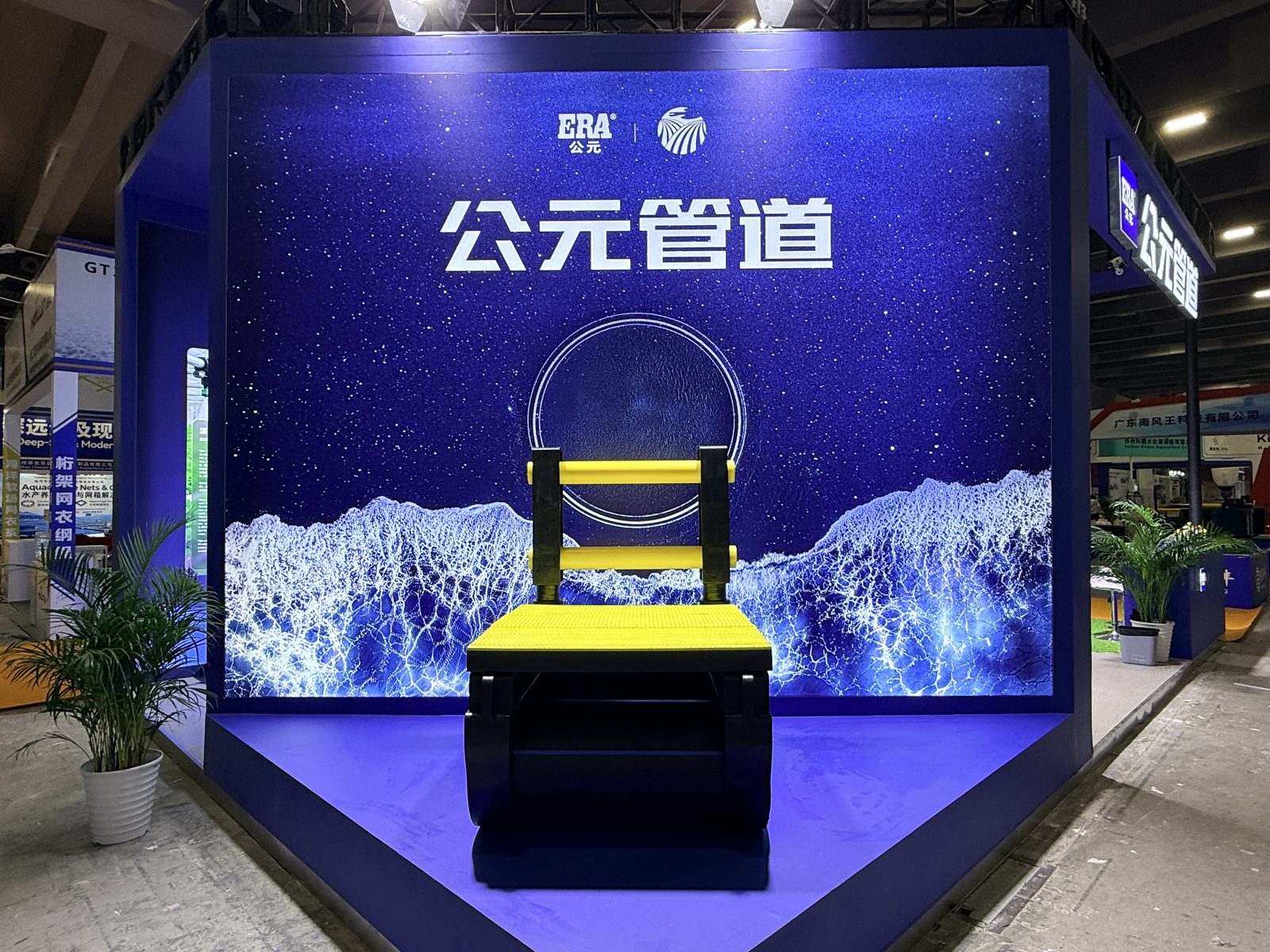
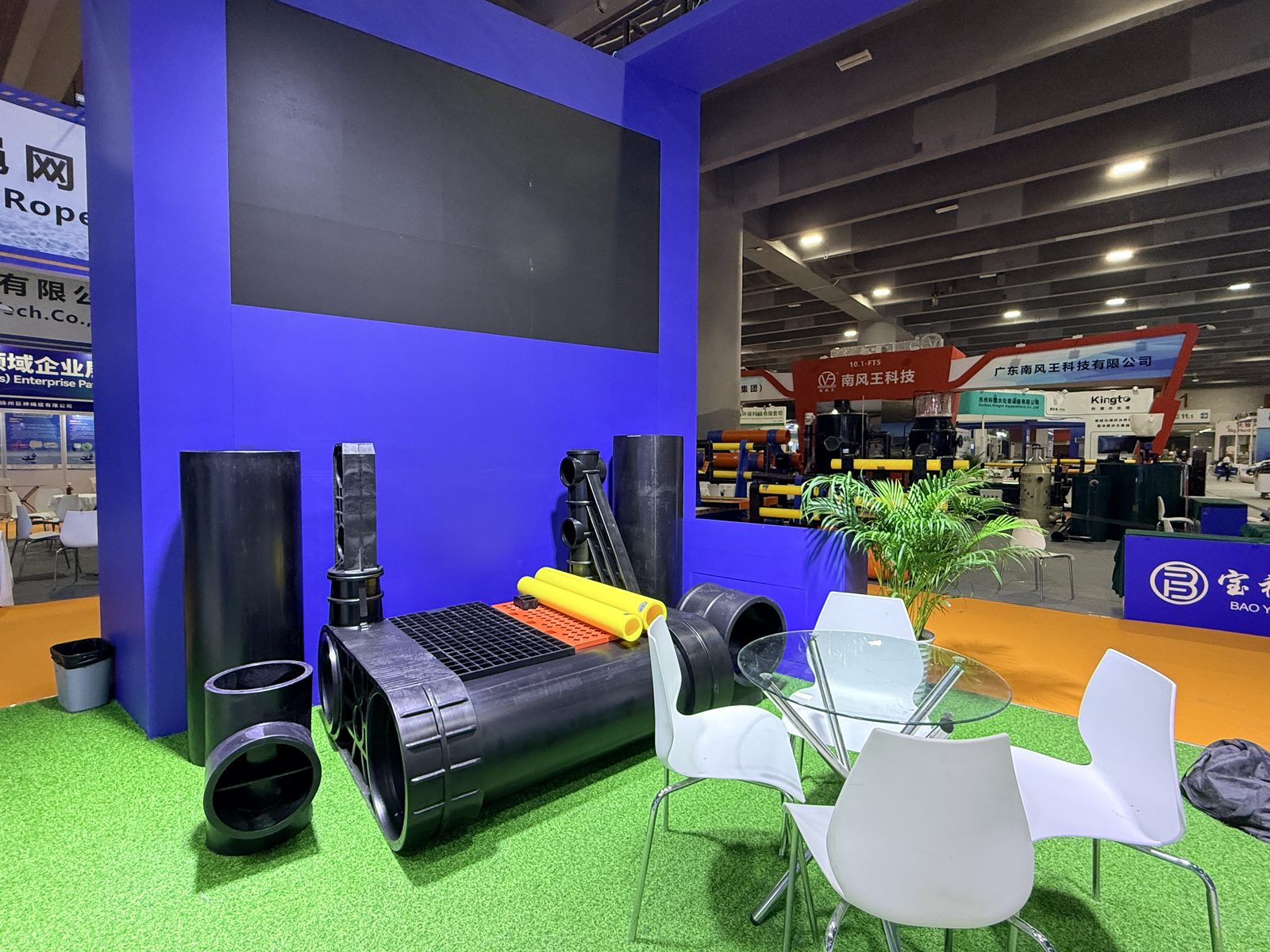
The HDPE aquaculture walkway platform on the ERA stand at the Guangzhou International Fisheries Expo 2026.
The core components of the cage system were on display as full-size physical samples rather than photographs, and a scale model showed how a complete array goes together. Senior technical staff worked with visitors one-to-one, going through site conditions and sizing rather than handing out brochures.
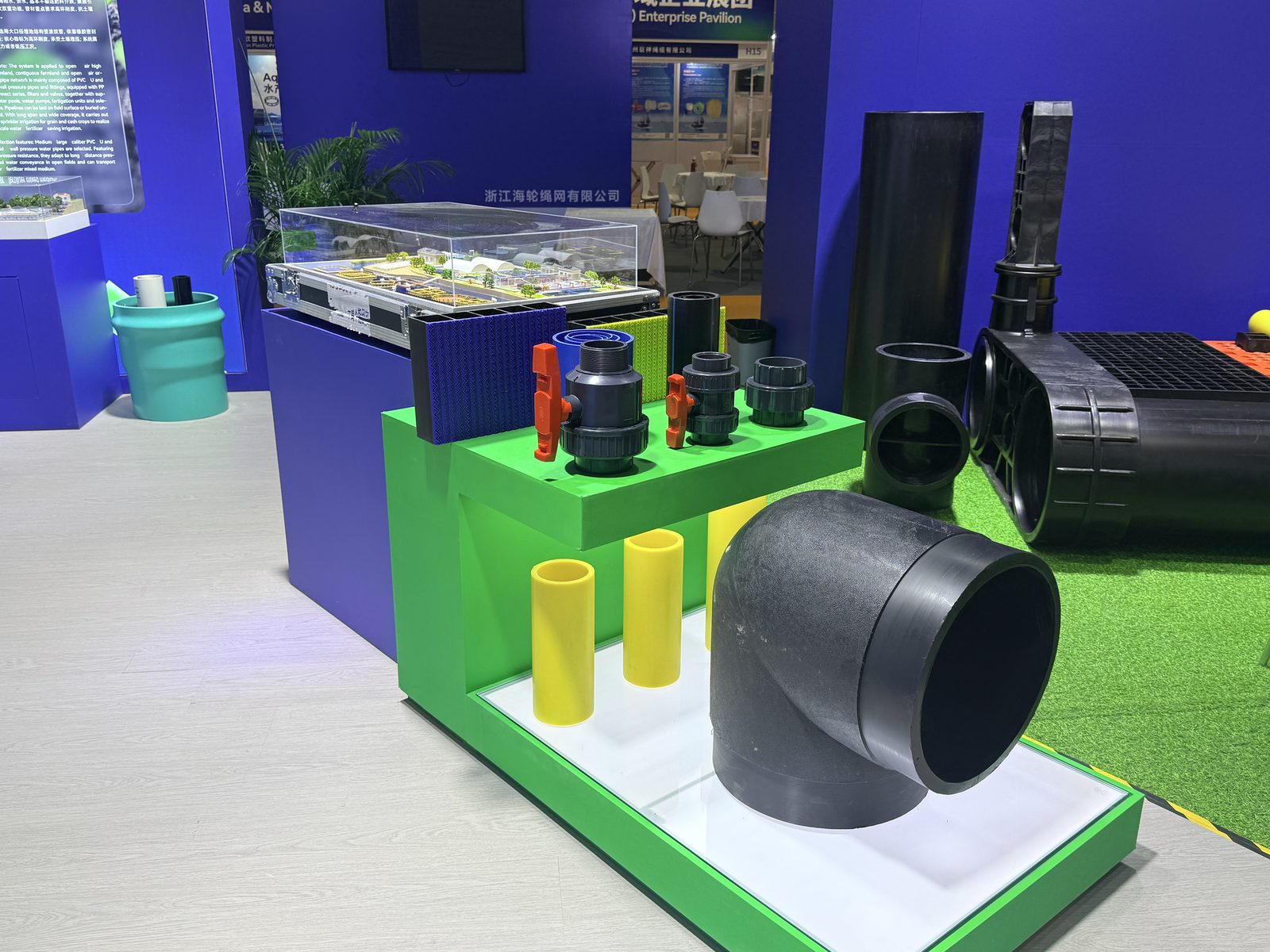
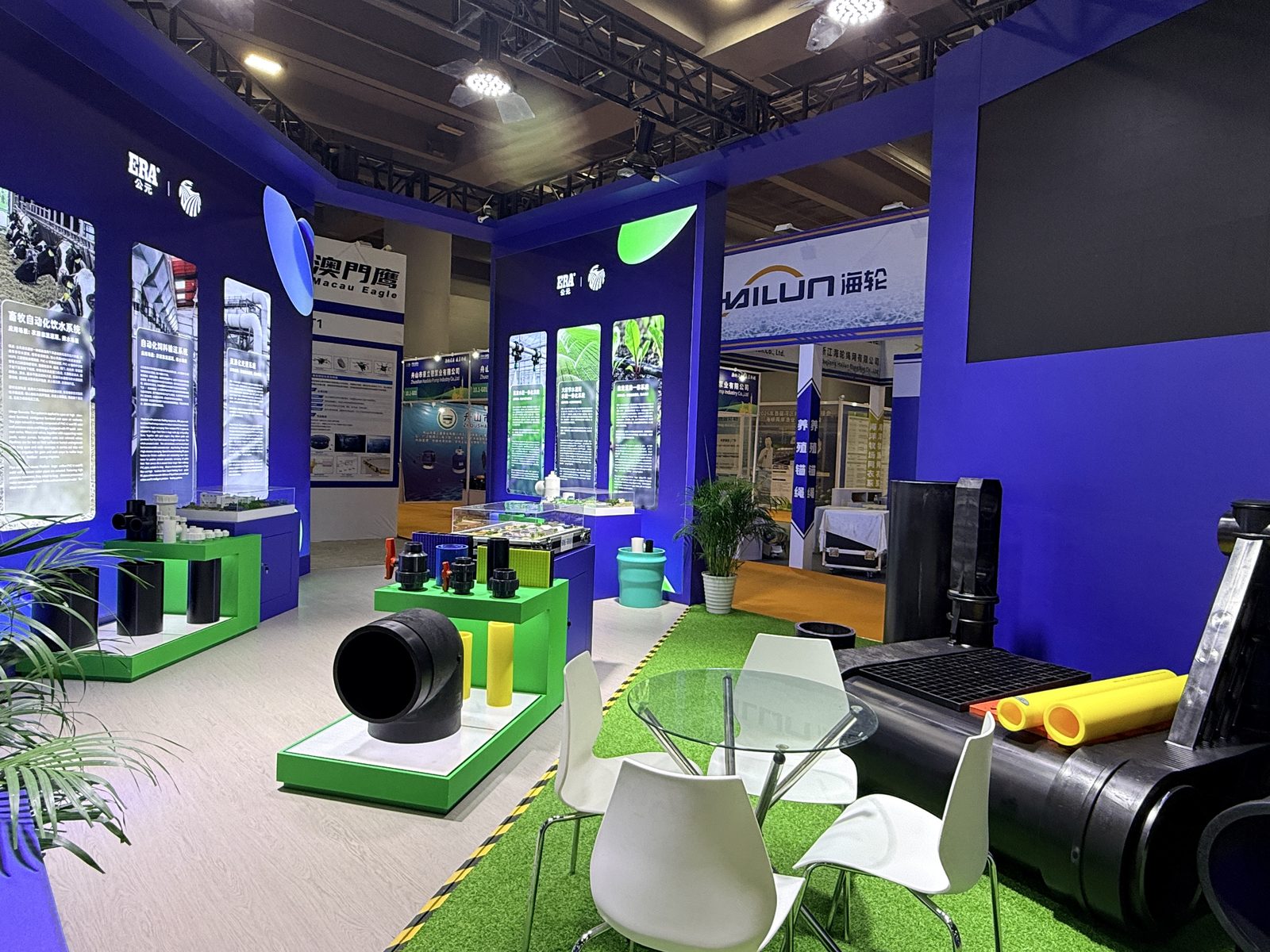
Visitors arrived with specific problems. How do you specify pipe when the cages sit in heavy swell? A recirculating system is being retrofitted — will it work with the existing pipework? Each question was answered against the project in hand, not in general terms. One buyer's summary of the stand: "ERA's product line is comprehensive — pipes through to fittings, all in one place — and the consultation on site was genuinely professional."
Across the three days of the show, ERA held in-depth discussions with a number of aquaculture enterprises and engineering contractors.
The fishery range shared the stand with two other system families, reflecting ERA's wider footprint in agriculture, forestry and livestock.
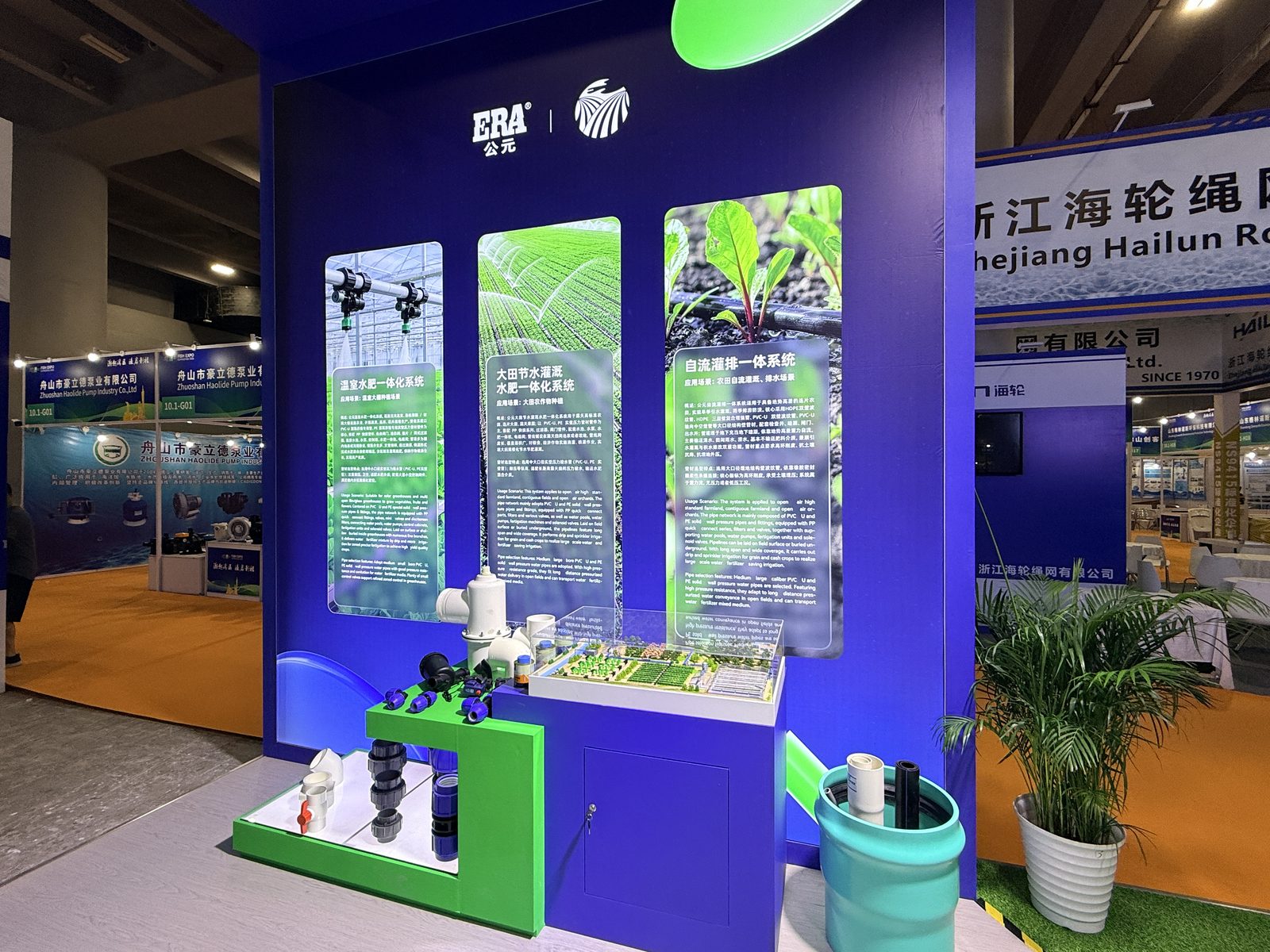
ERA's irrigation systems address the opposite problem to aquaculture — supply that is too coarse rather than too exposed. Field irrigation, gravity-fed irrigation, greenhouse systems and water-and-fertiliser integration are assembled from filter valves, water-supply PE pipe and irrigation outlets, so the system meters both water and nutrient instead of releasing them in bulk. The full set of options is set out in our smart agriculture piping solutions overview.
Compared with conventional flood irrigation, ERA's integrated systems are designed to cut water use by more than 30 per cent and fertiliser use by 30 to 50 per cent, while lifting yields by 10 to 25 per cent.
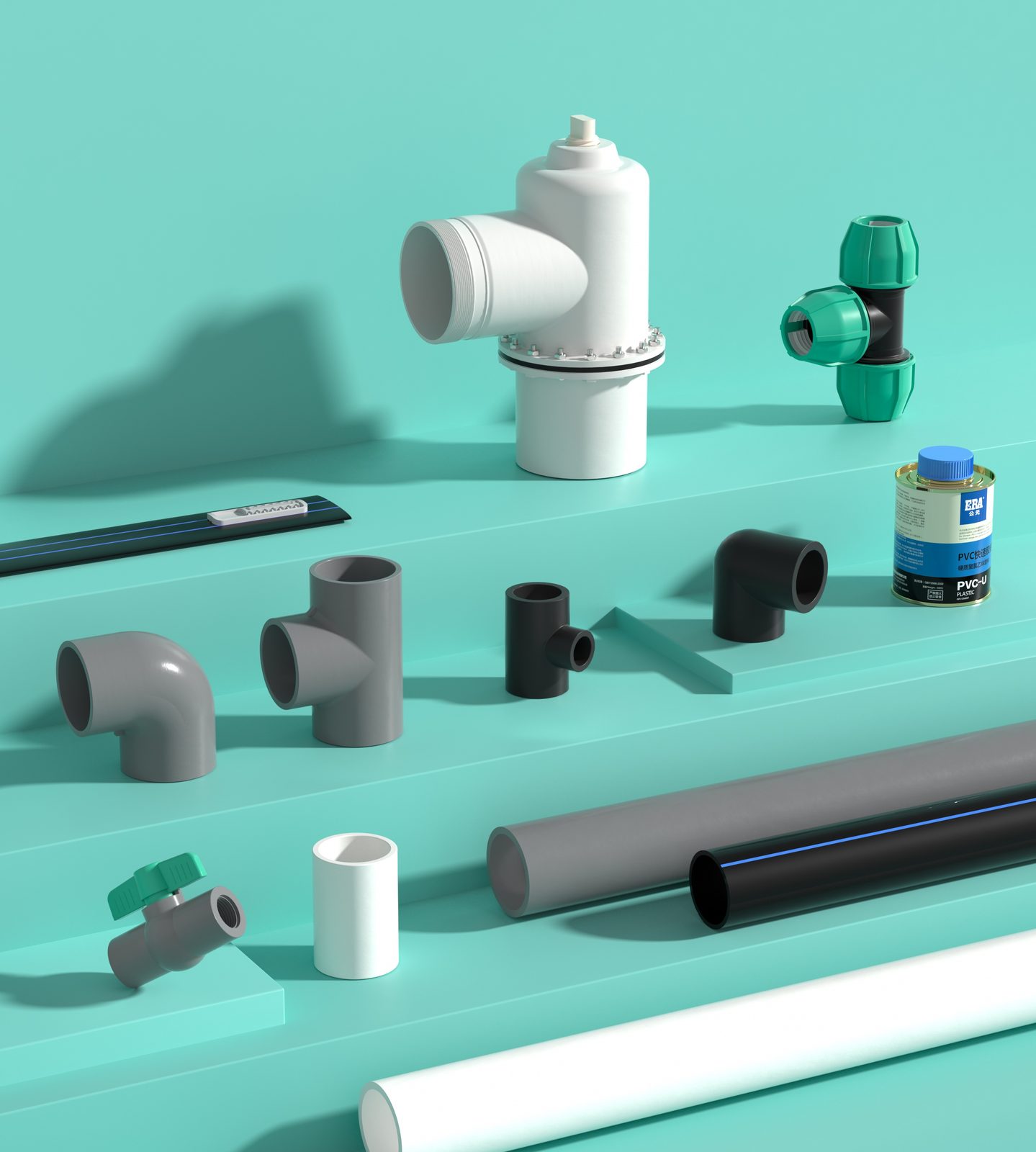
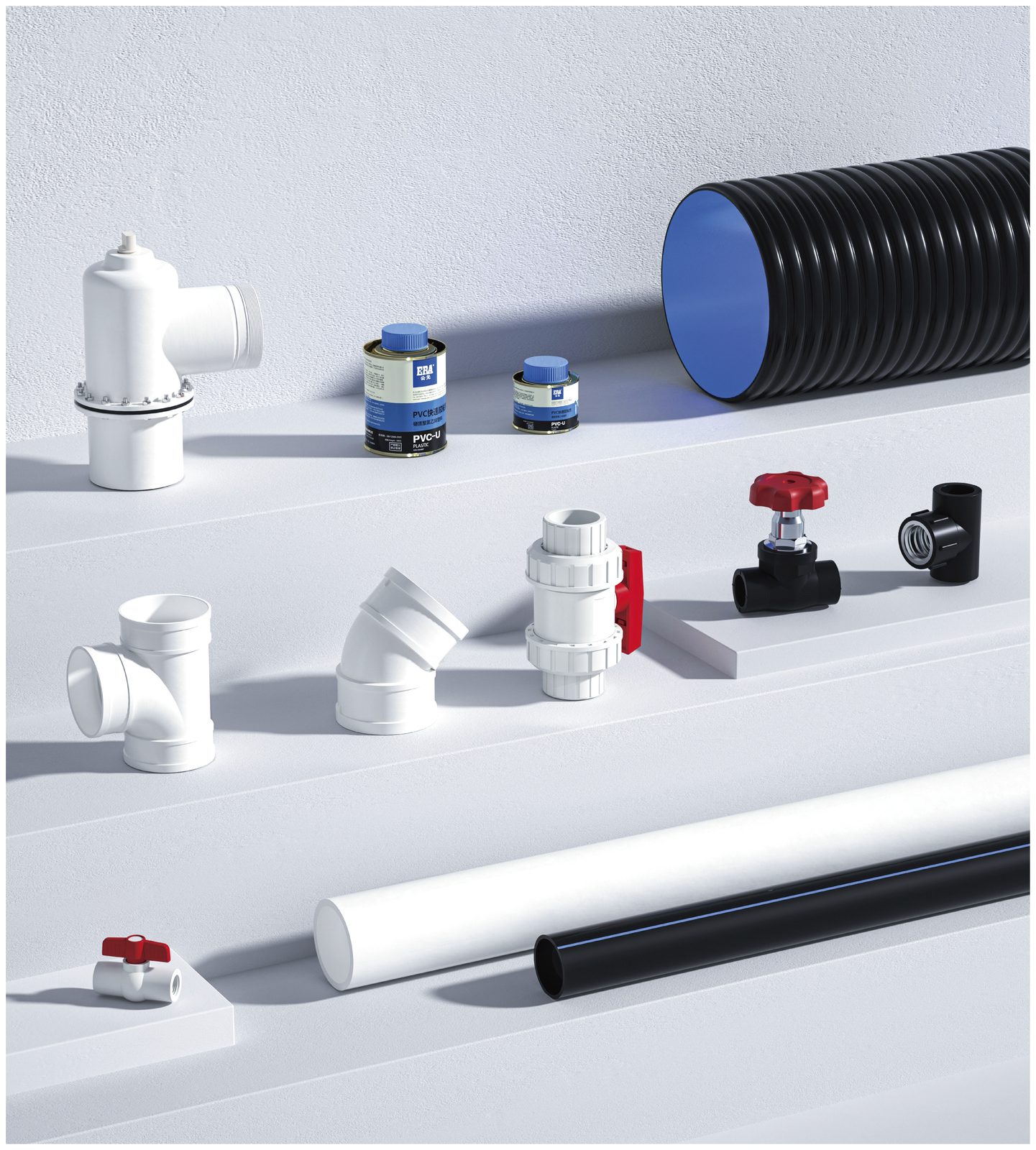
On the livestock side, ERA builds a full-process piping system for intensive farms from PVC-U livestock pipe, PVC-U sewage pipe, sleeves and handrail pipe. The system supports automatic drinking water and liquid feeding, and completes the manure collection loop by connecting through to a biogas digester — turning what is normally a waste-disposal cost into a resource stream.
ERA will continue to develop system-level piping solutions for the agriculture, forestry, livestock and fishery sectors, with the deep water cage range as the current focus. Past show reports and the company's exhibition calendar are collected on our exhibitions page.
If you are planning a deep water cage array, an irrigation upgrade or a livestock build-out, ERA's engineering team can size the system to your site. Explore the HDPE product range, see how ERA has delivered similar work in our project cases, or contact us with your site conditions and target capacity.