Views: 0 Author: Site Editor Publish Time: 2025-12-01 Origin: Site


Smart Jacking & Pulling Manufacturing – Leading the Way
ERA Launches PE Jacking & Pulling Pipe
Within the grand blueprint of urban infrastructure development, the drainage system serves as the city’s “lifeline.” To address issues such as aging, damage, collapse, and insufficient capacity of existing pipelines that lead to overflow problems, ERA Pipes has recently introduced a new Buried Flexible Sealed Self-Locking Joint Polyethylene Solid Wall Jacking & Pulling Pipe. This innovative product is quietly reshaping urban drainage systems and injecting new momentum into sustainable city development.
01 Challenges and Limitations of Traditional Construction Methods
 The conventional open-cut trenching method presents significant challenges:It often requires full or partial road closures, leading to regional traffic paralysis that severely impacts public mobility and socioeconomic activities. The complex network of underground utilities beneath roads makes relocation difficult and costly. Construction noise, dust, and vibrations cause prolonged disruption to adjacent commercial and residential areas.
Thus, the open-cut method is often not feasible in urban environments.
Geological Constraints
When construction sites involve soft soil layers such as fluid silt or fine sand, traditional trenching can lead to ground settlement, collapse, or pipeline displacement, compromising safety and quality. For example, in sewage network renovation projects where Quaternary alluvial layers contain deep silt, conventional pipe jacking is prone to slippage, whereas Jacking & Pulling Pipe technology better controls pipeline positioning through a combination of pulling and jacking forces.
Spatial and Environmental Limitations
In built-up urban areas or confined spaces, traditional open-cut excavation requires extensive road surface removal, which can damage surrounding buildings, roads, and underground utilities, while also disrupting traffic and daily life. Jacking & Pulling Pipe requires only small working shafts (e.g., 1.5–2.5 meters in diameter), minimizing surface disruption and making it ideal for space-constrained scenarios.
Impact on Surrounding Infrastructure
Open-cut excavation may disturb surrounding soil, leading to settlement of nearby structures and damage to underground pipelines. Jacking & Pulling Pipe employs trenchless technology, which minimizes ground disturbance and effectively protects adjacent infrastructure.
Construction Efficiency and Cost
Traditional trenching involves long construction periods, extensive earthwork, transportation, and backfilling, resulting in high costs. Jacking & Pulling Pipe eliminates large-scale earthmoving, improves construction efficiency, reduces overall costs, and is particularly suitable for long-distance pipeline installation.
02 Introduction and Advantages of PE Jacking & Pulling Pipe
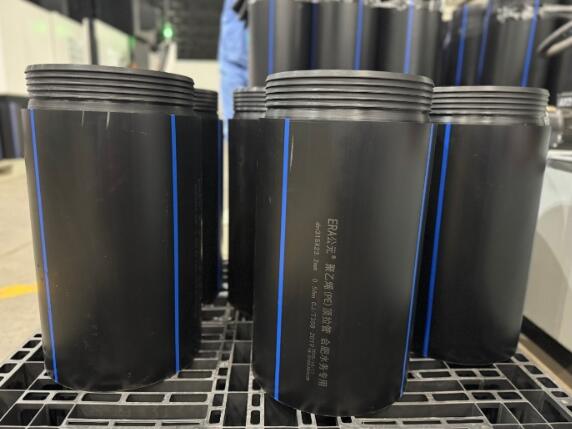
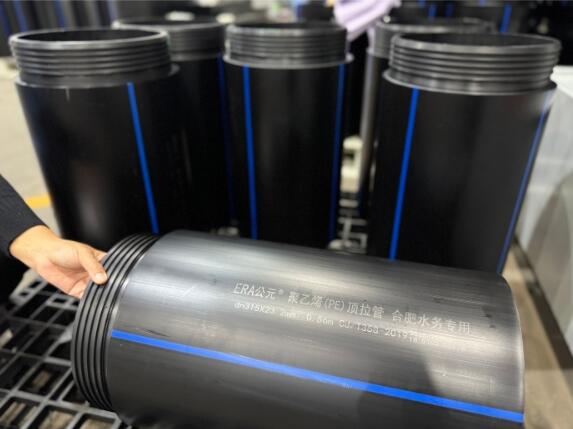 After thorough evaluation, PE Solid Wall Jacking & Pulling Pipe technology has been identified as the optimal solution. This method requires only small launching and receiving pits at both ends of the road section to complete pipeline installation, minimizing disruption to surface traffic and activities. The selected polyethylene(HDPE) solid-wall pipe offers excellent flexibility, allowing it to adapt perfectly to the jacking and pulling path. Its heat-fusion joint system ensures zero leakage throughout the pipeline, while the smooth, corrosion-resistant interior surface significantly improves sewage flow efficiency and extends service life.
High Construction Efficiency: No large-scale road excavation is needed; small working shafts and short construction cycles significantly reduce project timelines compared to traditional pipe jacking or directional drilling, especially in confined or high-traffic areas.
Low Environmental Impact: Minimal soil disturbance during construction helps maintain original ground stability, reducing surface settlement and impact on nearby buildings and utilities, making it ideal for sensitive areas such as city centers and historic districts.
Strong Adaptability: Suitable for various geological conditions including silt and fine sand. Construction parameters (e.g., slurry pressure, cutterhead size) can be adjusted to optimize performance, and the system can handle complex terrain and obstacles.
Cost-Effectiveness: Low working shaft costs and no need for extensive earthmoving or road restoration significantly reduce overall expenses, particularly for long-distance, large-diameter pipelines.
High Safety: Trenchless construction eliminates risks associated with open-cut methods such as collapse and personal injury. The process is highly controllable, with real-time monitoring and adjustment to lower the probability of accidents.
03 Core Functions of PE Jacking & Pulling Pipe
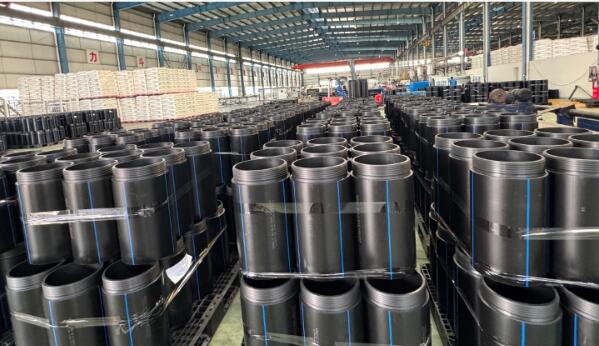 The fundamental capability of PE Jacking & Pulling Pipe is to install pipelines deep underground without damaging surface structures. This core function delivers several key benefits:
Core Function: Trenchless Pipeline Installation
Trenchless pipeline installation is the most essential feature of Jacking & Pulling Pipe technology. Using specialized jacking machines or directional drilling rigs, the pipeline is simultaneously pushed or pulled into a pre-formed underground borehole, completing the installation without surface disruption.
Municipal Engineering:
Water Supply and Drainage Pipelines: Used for laying and rehabilitating urban water supply, sewage discharge, and rainwater collection pipelines, especially under roads, rivers, and buildings to minimize traffic and lifestyle impacts.
Gas and Heating Pipelines: Enables safe and efficient installation in urban gas supply and district heating systems, reducing construction risks.
Telecommunications and Power Conduits: Provides underground pathways for fiber optic cables and power lines, ensuring reliable information and energy transmission.
Transportation Infrastructure:
Crossings under Highways and Railways: Facilitates pipeline installation beneath roads and rail lines during new construction or upgrades without major traffic interruptions.
Bridge and Tunnel Utility Pipelines: Supplies drainage, ventilation, and other systems for bridges and tunnels, adapting to complex geological conditions.
Energy and Industrial Sectors:
Oil and Gas Pipelines: Supports long-distance oil and gas transmission across challenging terrains such as mountains, rivers, and wetlands with minimal environmental impact.
Chemical and Industrial Pipelines: Used within chemical parks and industrial plants for material transport, meeting safety production and environmental standards.
Water Conservancy and Agriculture:
Irrigation and Drainage Pipelines: Enables rapid installation in farmland irrigation and flood control projects, improving water resource efficiency.
Reservoir and Water Conveyance Pipelines: Used in reservoir water transfer and water plant supply systems to ensure reliable water delivery.
Environmental Protection and Rehabilitation:
Pollution Control Pipelines: Used in soil remediation and groundwater treatment projects for monitoring and mitigation, enabling precise environmental operations.
Ecological Restoration Pipelines: Supports water circulation and ecological replenishment in wetland and river restoration projects.
The launch of PE Jacking & Pulling Pipe marks a new milestone in ERA’s HDPE product line and signifies the beginning of the next phase. We are committed to understanding customer needs, conducting in-depth research and development, and manufacturing more pipeline products that meet the evolving demands of the market.