


Views: 0 Author: Site Editor Publish Time: 2026-05-27 Origin: Site


One of the most troublesome problems at construction sites for HDPE pipeline projects is pipe “flattening”. Whether an electrofusion socket cannot be fitted, or there is serious mismatch during butt fusion, the root cause almost always points to one key technical indicator: Ovality (Out-of-roundness). This article provides a full lifecycle analysis of HDPE pipe ovality to help you fully master this critical parameter.
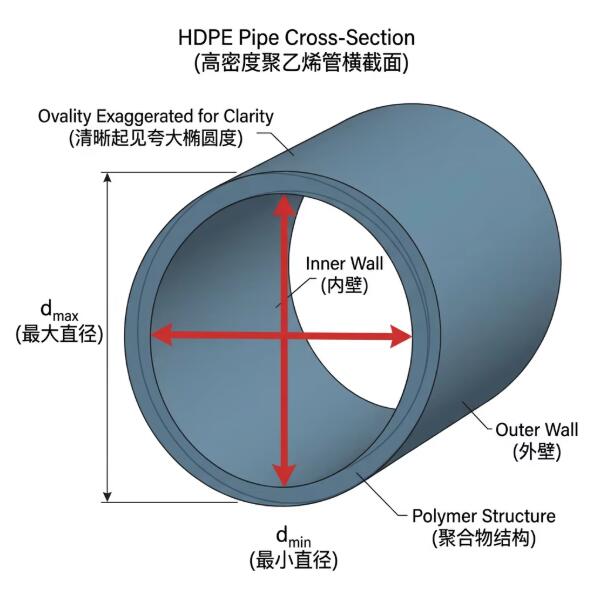
Ovality means the difference between the maximum outside diameter (d_max) and the minimum outside diameter (d_min) measured on the same cross-section of the pipe.
Formula: Ovality = d_max − d_minPercentage: Ovality (%) = (d_max − d_min) / dn × 100%
Straight pipes: Follow ISO 11922-1 tolerance grades; water supply pipes generally use Grade A. For pipes with dn ≤ 250, the maximum ovality is typically controlled at approximately 0.008dn + 1 mm.
Coiled pipes: Mechanical deformation occurs during coiling; limits are usually agreed between supplier and purchaser. Industry practice (e.g., PPI TN-61) allows ovality of 3.5%–5.0% for coils, but re-rounding is mandatory before welding.
Based on SDR (Dimension Ratio). Thinner-walled pipes (higher SDR) allow higher ovality ratios, usually between 1.5% and 5%.
Factory requirement: For dn ≤ 63, the maximum ovality is usually 5.0%; for dn > 63, stricter Grade A of ISO 11922-1 applies.After transportation: The standard notes that ovality may increase after storage and transportation due to the flexible nature of PE.
According to ISO 11922-1:2018, Grade B for sizes ≤ 630 and Grade A for sizes ≥ 710.
According to ISO 11922-1:2018, Grade N for sizes ≤ 800 measured at the production site.Tolerance is calculated as 0.009 × dn, which may not comply with Grade A in ISO 11922-1:2018.For straight pipes of dn ≥ 900, the maximum ovality shall be agreed between manufacturer and end user.
2.1 Vacuum Calibration:The roundness accuracy of the sizing sleeve and stable vacuum pressure are critical.
2.2 360° Laser Real-Time Monitoring:High-end production lines use online scanners for real-time measurement and automatic adjustment.
2.3 Balanced Haul-Off Pressure:Uneven pressure on crawler tracks can flatten the pipe.
2.4 Cutting and Support:Large-diameter pipes must be placed on curved supports to avoid deformation from self-weight.
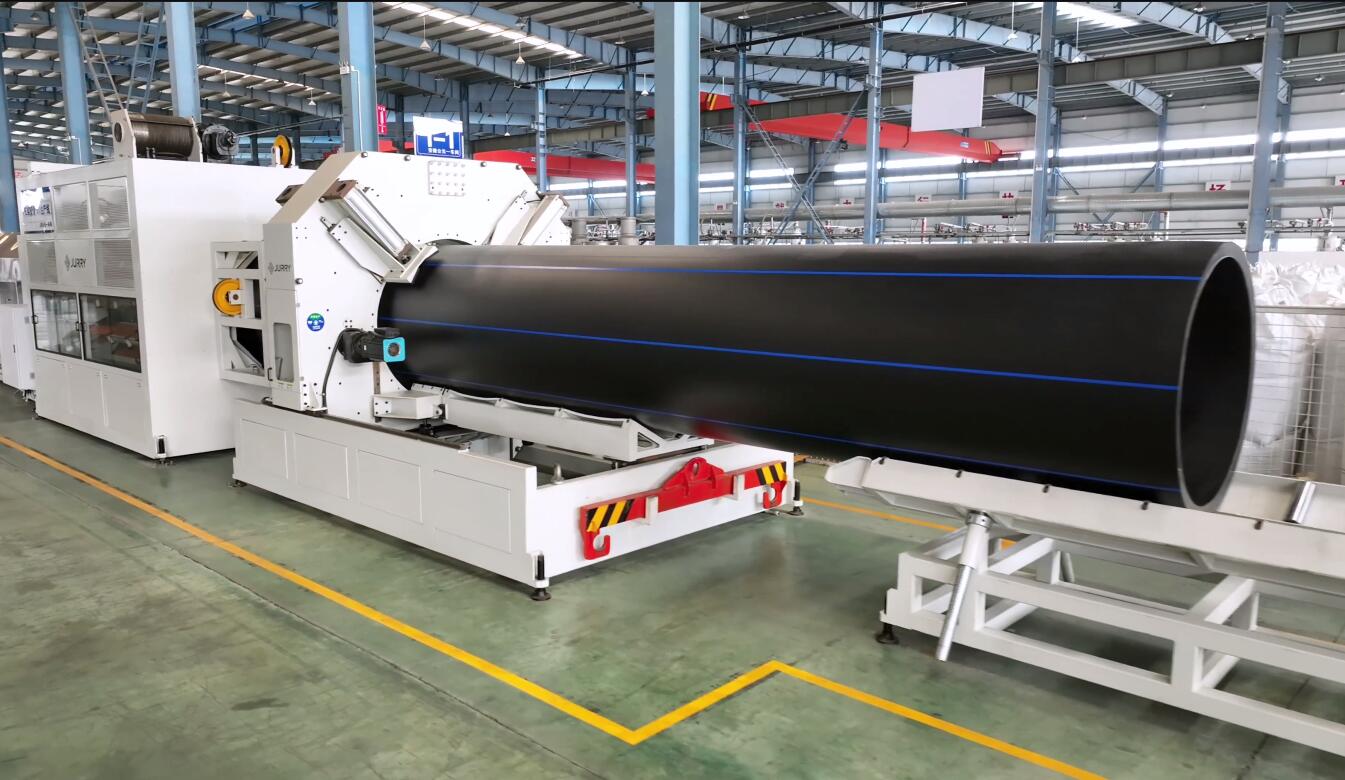
A. Uneven cooling during extrusion
B. Overstacking causing deformation on lower layers
C. Extrusion or binding during transportation
D. PE creep: long-term load or temperature changes affect roundness
In many cases, pipes are qualified when leaving the factory but become oval on site, mostly due to logistics.
Flat truck bed with no sharp protrusions
Reasonable stacking: avoid high stacking for large-diameter and thin-wall pipes; SDR 11 is more rigid than SDR 26
Proper strapping: use wood or rubber pads to distribute pressure
Maximum stacking height: ≤ 1.5 m
Level ground with sleepers every 1–2 m
Sun protection: high temperature accelerates creep and worsens ovality
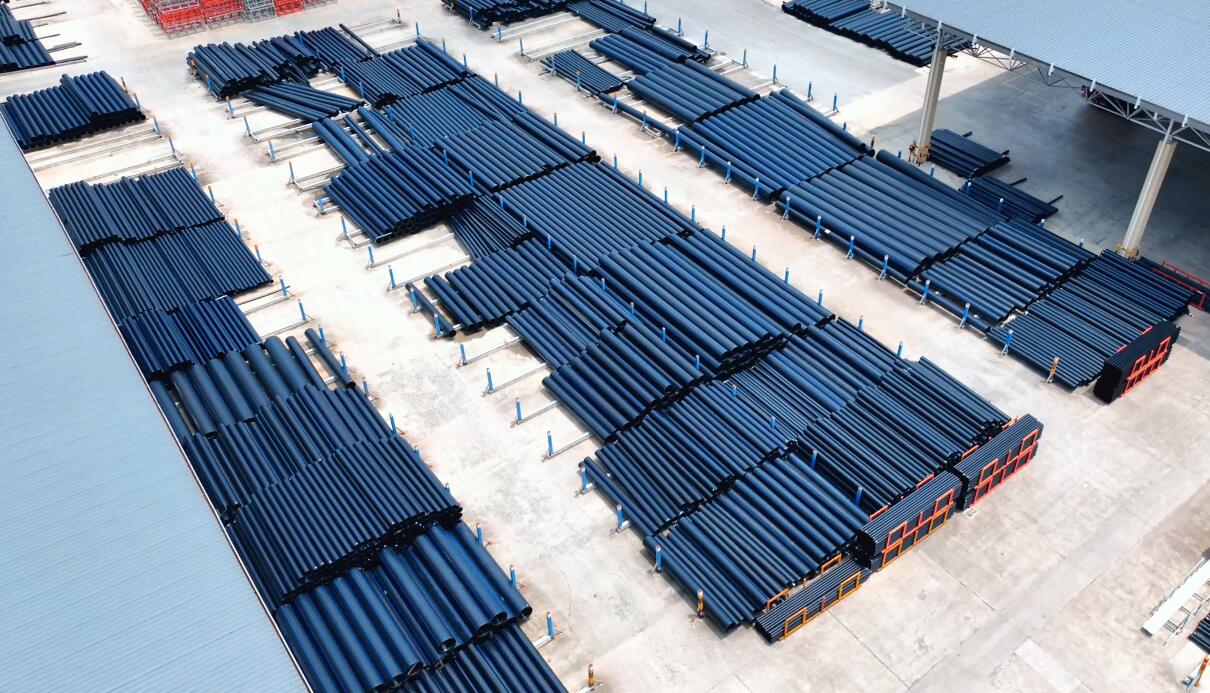
Steel Frame Cradles: for large diameters and sea transport
Pallet Supports: for DN 110–315 with curved wooden supports matching the pipe OD
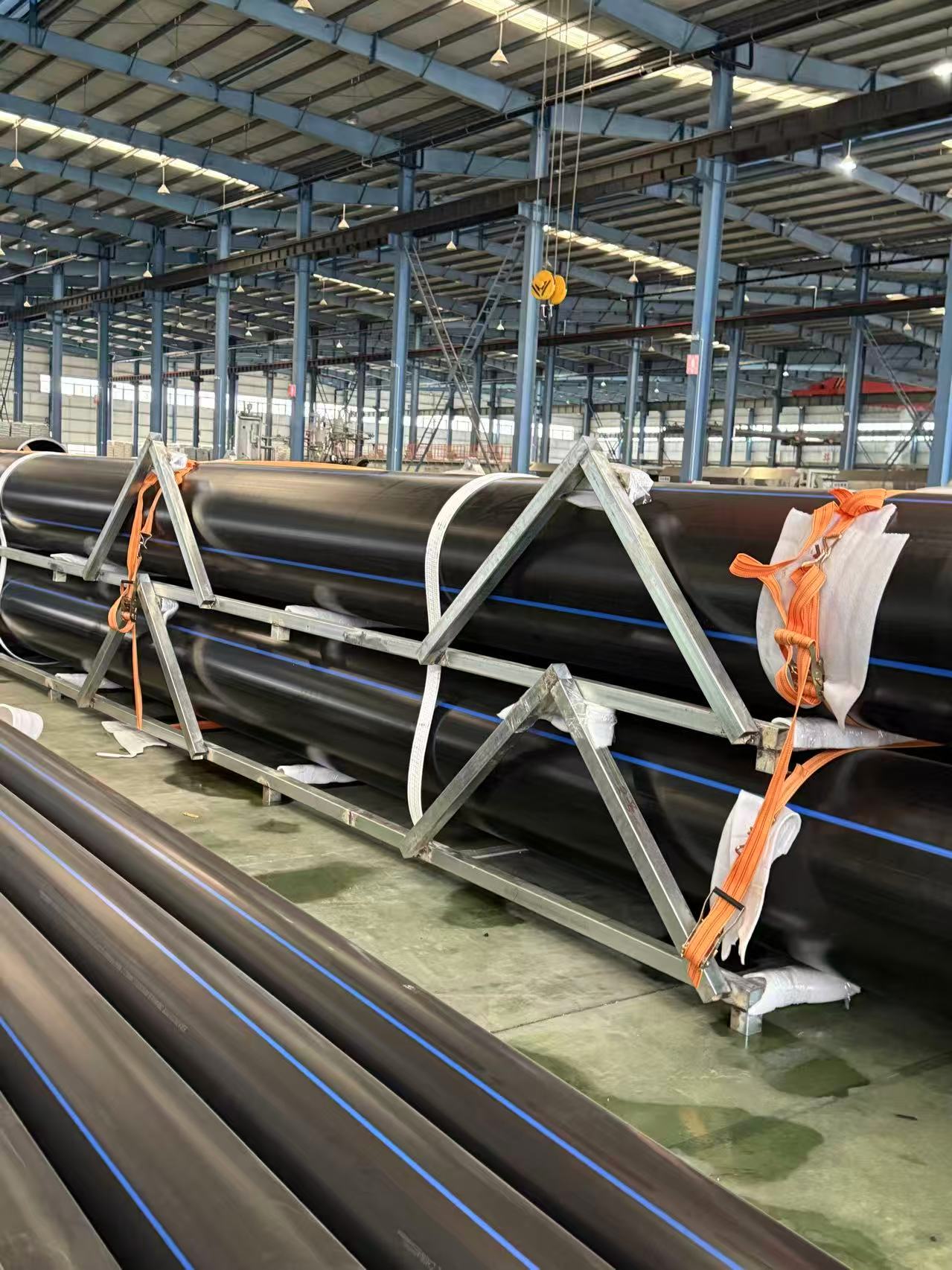
Stack height ≤ 1.5 m
No rough ground; sleepers every 1.5 m
Shading to avoid softening in high temperatures
Mechanical/hydraulic re-rounders: most effective; hold pressure for at least 30 minutes
Warm heating: use about 60°C water in cold weather before re-rounding
End trimming: cut 0.3–0.5 m from the deformed end to restore roundness
If a pipe is too oval for electrofusion or butt fusion, do not discard it immediately. Try the following methods:
Re-rounding clamps: use two-piece aluminum or steel clamps to restore roundness
Heat recovery: place the deformed side upward in sunlight or use a hot air blower
End cutting: trim 0.5 m from the most deformed end to improve roundness
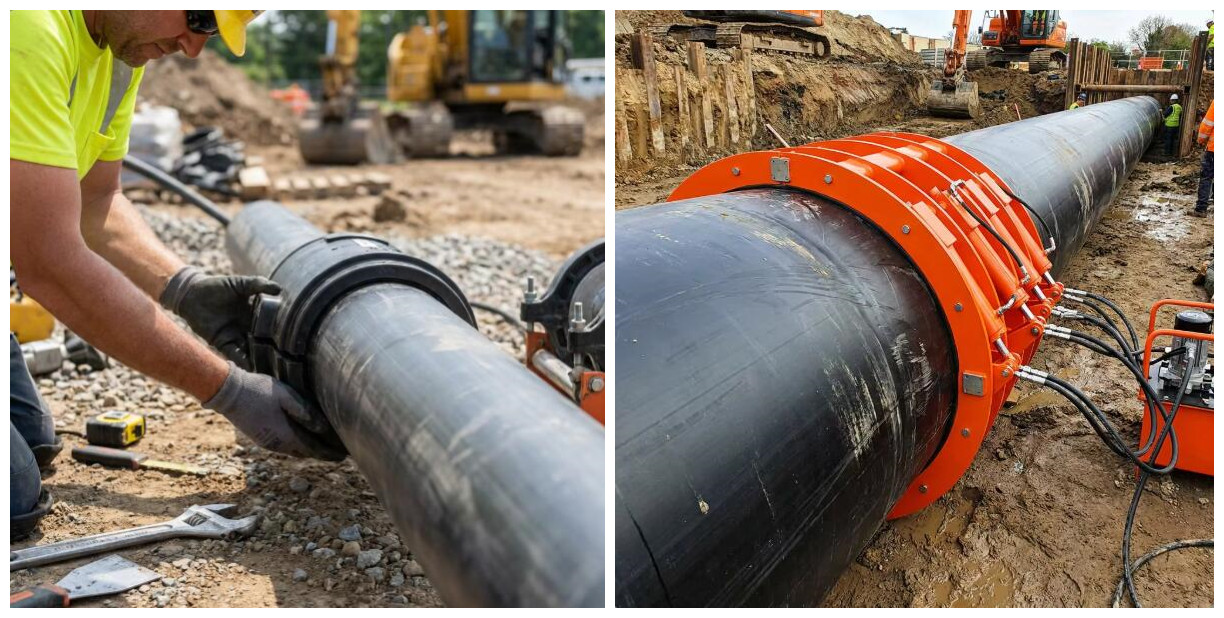
According to the Plastics Pipe Institute (PPI) , HDPE is flexible. After buried and pressurized, internal pressure expands the pipe and automatically corrects most ovality. The key point is to ensure roundness at the welding zone, not the entire pipe.
Internal pressure self-correction: pressure restores roundness like inflating a balloon. Ovality affects installation more than long-term performance.
Temperature affects measurement: PE expands and contracts significantly. Always measure at a constant 23°C.
Mismatch (High-Low) is the real hazard: severe ovality causes fusion mismatch over 10% of wall thickness, leading to stress concentration and slow crack growth.
Ovality is an inherent characteristic of flexible HDPE material. With precise production, proper logistics, and professional on-site tools, ovality can be reliably controlled within safe limits.
FAQ for HDPE Pipe Ovality
Q1: Is HDPE pipe ovality always a sign of poor quality?
A: Not necessarily. HDPE is a flexible, viscoelastic material. Minor deformation due to self-weight or shipping is natural. As long as it stays within standard limits (like ~2% per ISO 4427) or can be re-rounded in the field, it’s not considered a defect.
Q2: Why do large-diameter or thin-walled pipes (High SDR) flatten more easily?
A: It’s all about Ring Stiffness. Higher SDR means thinner walls relative to the diameter, making the pipe less resistant to crushing. This is why we recommend Steel Frame Cradles for shipping thin-walled pipes—they take the weight off the bottom layer.
Q3: Can I weld an oval pipe directly?
A: No. For butt fusion, ovality causes a "high-low" mismatch. For electrofusion, it creates an uneven gap between the pipe and coupler. Always use a re-rounding clamp before welding to ensure joint integrity.
Q4: Does temperature affect ovality measurements?
A: Yes, significantly. HDPE has a high thermal expansion coefficient. Measurements taken in the direct sun are unreliable. For official inspections, pipes must be conditioned at 23±2°C for 24 hours.
Q5: Will internal pressure fix the ovality once the system is running?
A: Yes, internal pressure acts like a balloon and pushes the pipe body back into a circle. However, this won't fix a bad weld. You must ensure the pipe ends are round during the welding process to prevent stress concentration.


